
As Apple prepares to kill Intel Mac apps and video games, I wish Macs were a bit more PC Leave a comment
Are tech-triggered flashbacks a factor? They are for me. I’ll be doing one thing suitably geeky when chills run down my backbone. Maybe an emulator will evoke the trauma of 8-bit video games crashing milliseconds earlier than the ultimate display screen. Or a video filter app will spark reminiscences of VHS tapes being devoured with out warning. The newest flashback comes courtesy of Apple, now reminding us Intel-based Mac apps will quickly be despatched to stay on a farm. Which makes a spotlight reel of earlier appageddons play on a loop in my head.
Admittedly, a new appocalypse isn’t breaking information. Apple, ever keen to torch its personal previous, introduced at WWDC 2025 that it will sever its final ties with the Intel period. So macOS 26 (Tahoe) would be the ultimate model to assist Intel Macs. Its successor, out later this yr, would be the final to carry the total Rosetta translation layer. (Apple says it is going to proceed to assist some older, unmaintained Intel-based Mac gaming titles.) Then 2027 will usher in macOS 28 – aka macOS Death Valley, presumably – plagued by the corpses of numerous Intel Mac apps.
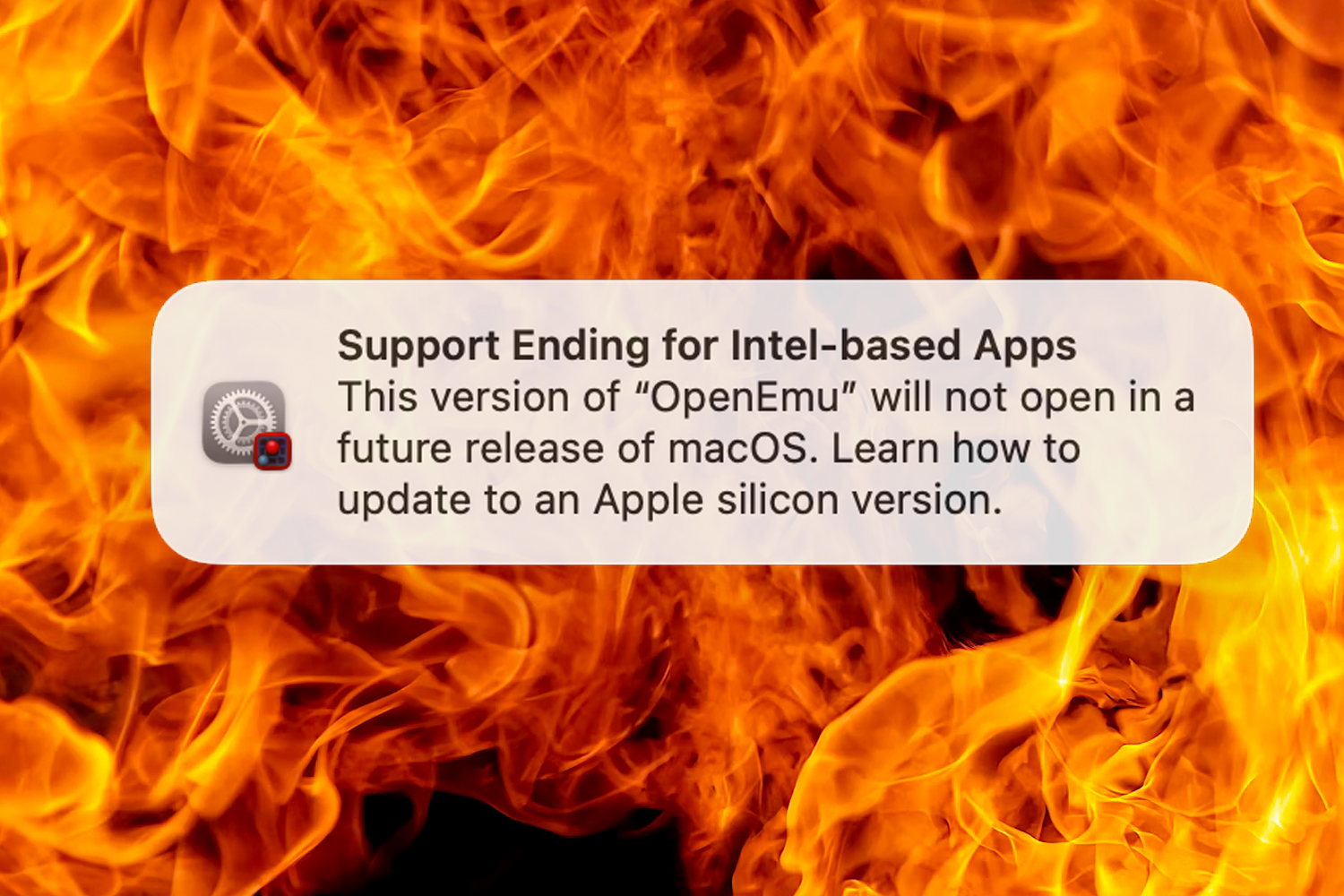
This week, the primary warnings reached the general public. Launch an Intel Mac app within the macOS 26.4 public beta and you’ll be notified it gained’t survive the looming appocalypse. I received one when firing up OpenEmu, a slick retro emulator that I love as a result of it simply works. Although, fairly quickly, it apparently gained’t.
This compelled me to root across the System Information app in /Applications/Utilities to discover more apps on borrowed time. Want to do the identical? Under Software, choose Applications, type the record by sort, search for Intel, and then stare in horror at what’s on the chopping block.
Game over

For me, that’s largely video games, audio plugins and a hardly ever used however glorious net design app. From obscure and bizarre corners of the software program world, then, however these are sometimes the greats. And these least probably to be up to date – as a result of they’re hardly money-spinners – regardless of what number of alerts Apple flings everybody’s means.
But, as famous earlier, we’ve been right here earlier than. Apple nuked 32-bit iPhone apps in 2017. I nonetheless have an iPhone ‘folder of sadness’, stuffed with apps and video games that can by no means see an replace. To date, solely Coolson’s Pocket Pack has escaped. Missing outdated favourites even drove me to wrestle with an outdated iPad Air, downgrading it to the final model of iOS that supported 32-bit apps. The outcome: a sort of interactive shrine to basic misplaced iOS video games.
On Mac, 32-bit apps received a longer keep of execution, bowing out with macOS 10.15 Catalina in 2019. Now it’s the flip of Intel Mac apps. I’ve no house to hold an outdated Mac round, although. So Virtual Machines underneath UTM can have to suffice for wistful trots down reminiscence lane. But even that’s a faff. It’s probably, then, that Intel favourites will survive solely in my reminiscence, alongside my endless disdain for Apple repeating this cycle.
Which begs the query: why? Sure, Apple Silicon debuted in 2020, however Intel Macs were offered till 2023. Presumably, Apple thinks 4 years is sufficient transition time for everybody. But I can’t assist wishing for some Windows-style tolerance for the previous – Macs which might be simply a bit more PC, letting us revisit outdated favourites with ease. After all, it’s not like Apple is wanting a couple of dollars to hold the outdated magic alive.