

How to Configure Self-service Password Change for AD Users Leave a comment
Read this information to find out how to arrange self-service password reset for Active Directory customers.
Step 0: Review Problem Background and Overview
Whenever customers want to change their Active Directory password, they name the Service Desk group. This is time-consuming and unsustainable.
So, your supervisor requested you to configure a device that permits customers to change their passwords.
I’ll stroll you thru the steps to full this process on this information.
I’m utilizing a Windows Server 2022 Standard server for my take a look at configuration. The server have to be a member of the area, and you could check in to it along with your area credentials.
Step 1: Install Remote Desktop Web Access and IIS Web Server
- From the Server Manager Manage menu, choose Add Roles and Features.

- When the Add Roles and Features wizard opens, click on Next till you get to the Server Roles web page. Then, test Remote Desktop Services and Web Server (IIS). When you test Web Server (IIS), the wizard dispays a pop-up, choose Add Features within the pop-up.

- Confirm that the 2 roles are checked. Then, click on Next.

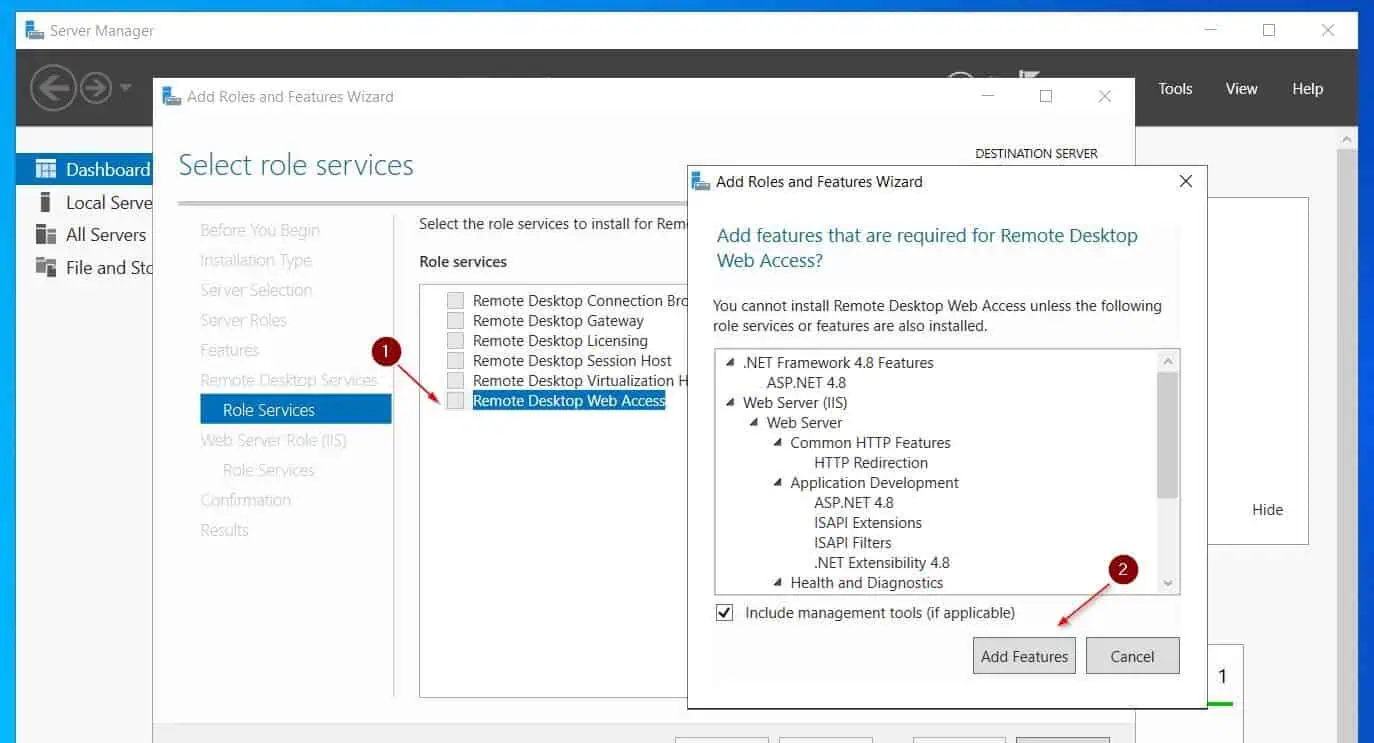
- Continue clicking Next till you get to Remote Desktop Services Role Services. Check Remote Desktop Web Services, then, click on the Add Features button within the pop-up.
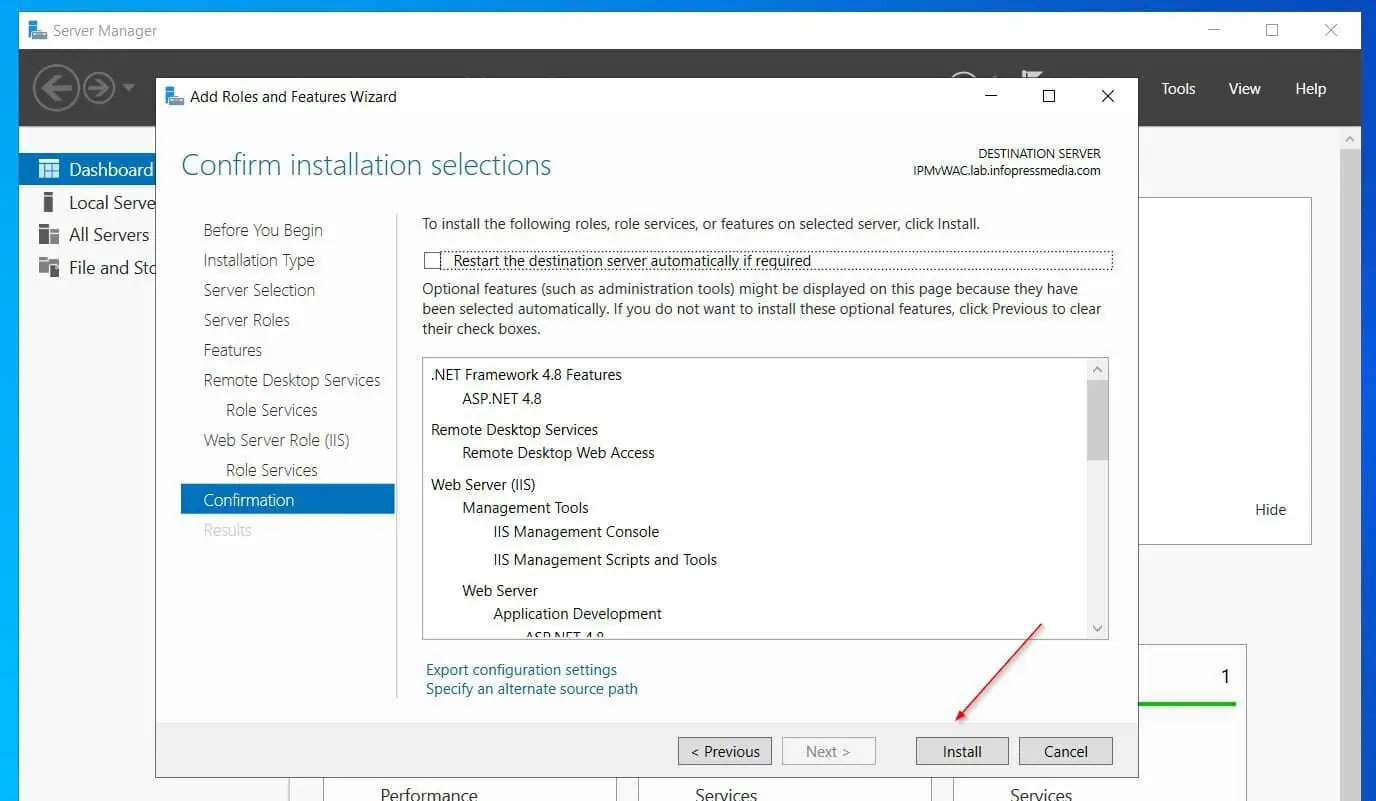
- After that, click on Next a number of instances till you get to the Confirmation web page. Click Install to set up the Windows Server roles.
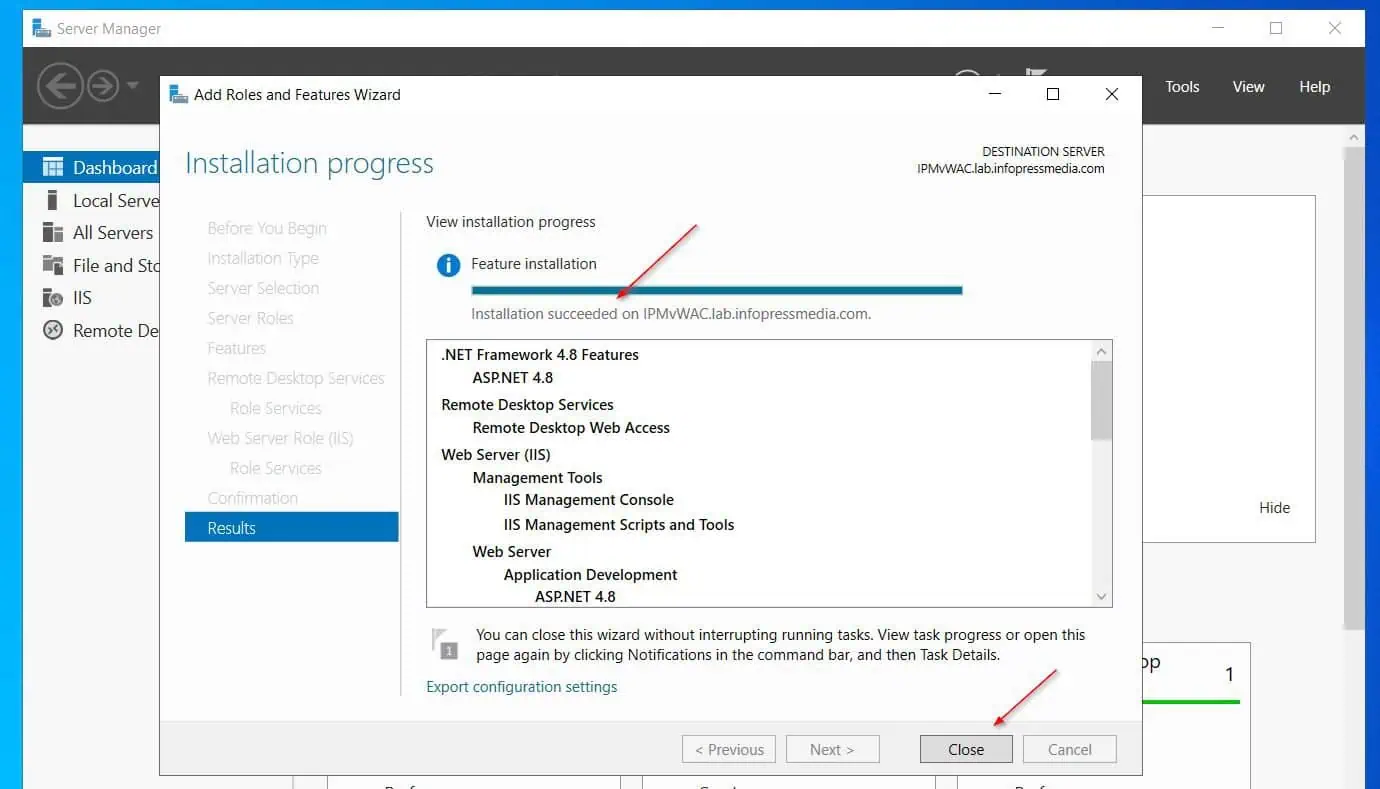
- Wait for the wizard to affirm that the roles have put in efficiently, the shut it.
Step 2: Enable the Password Reset Feature in IIS RDWeb
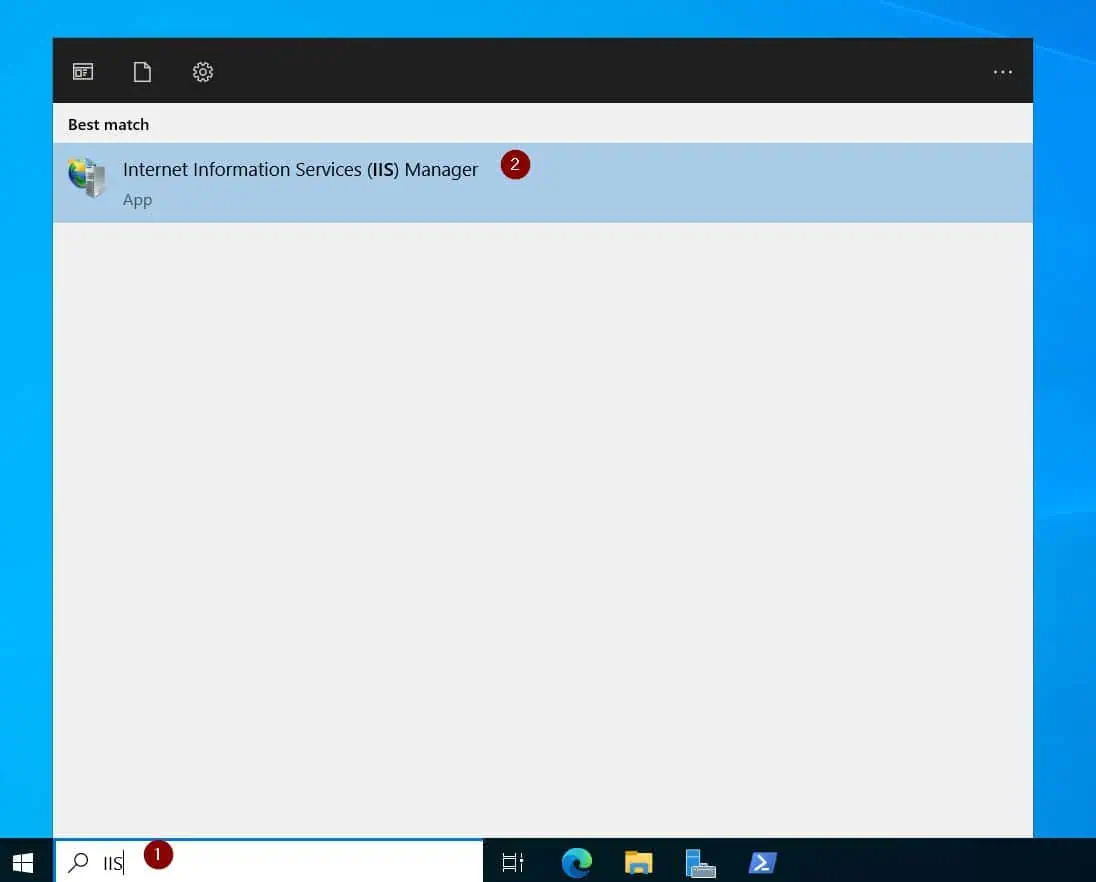
- Search for and open IIS.
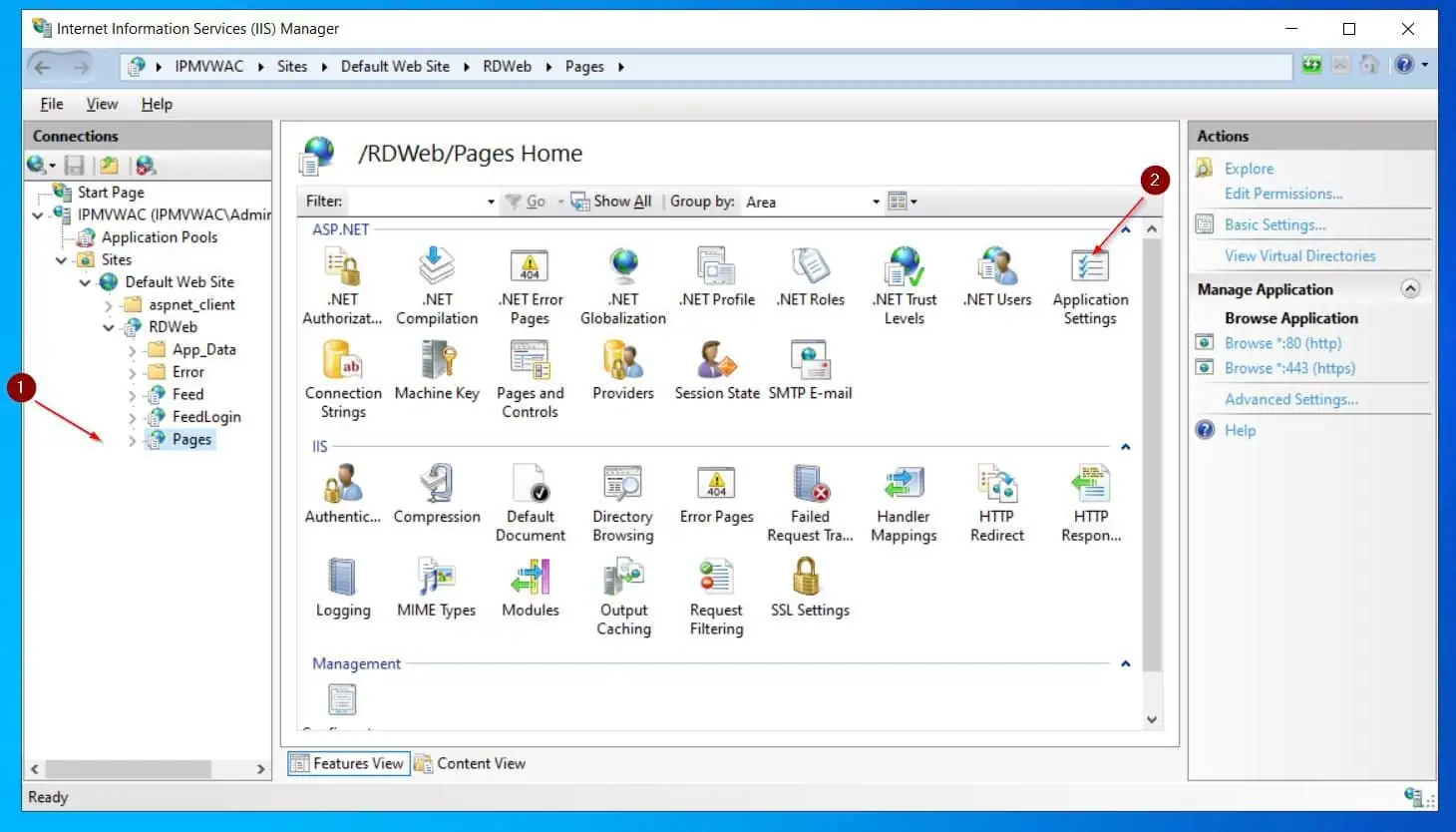
- In the IIS Manager, increase the Server title, then navigate to Sites > Default Web Site > RDWeb and left-click Pages. On the small print pane, double-click Application Settings.
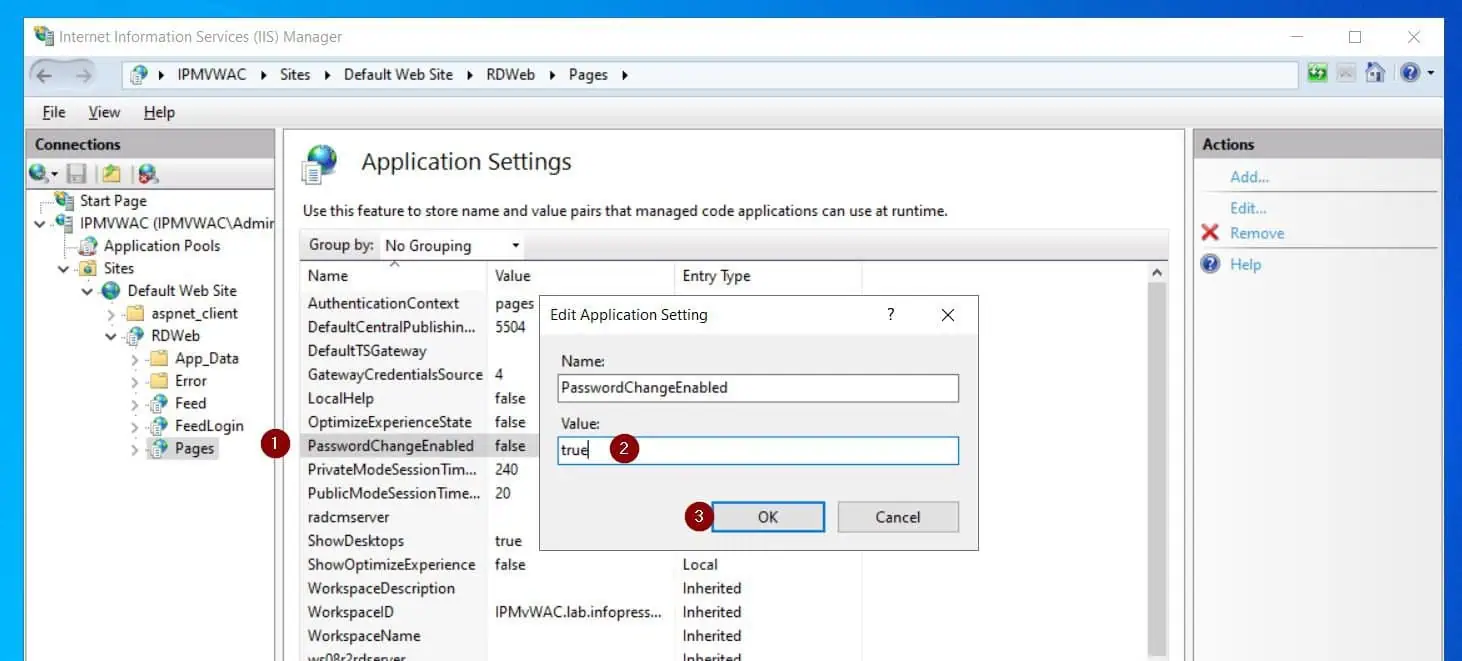
- On the Application Settings web page, double-click PasswordChangeEnabled and alter its Value from false to true.
Step 3: Configure HTTPS Binding within the Remote Desktop Web Site
By default, the Remote Desktop Web Site in IIS is configured to use HTTPS. Meanwhile, to use HTTPS, you require a certificates.
If you’re configuring self-service password reset for manufacturing use, I like to recommend buying a publicly signed certificates from a certificates authority.
Since I’m configuring mine for take a look at functions, I will probably be creating and utilizing a self-signed certificates.
Task 3.1: Create a Self-signed Certificate
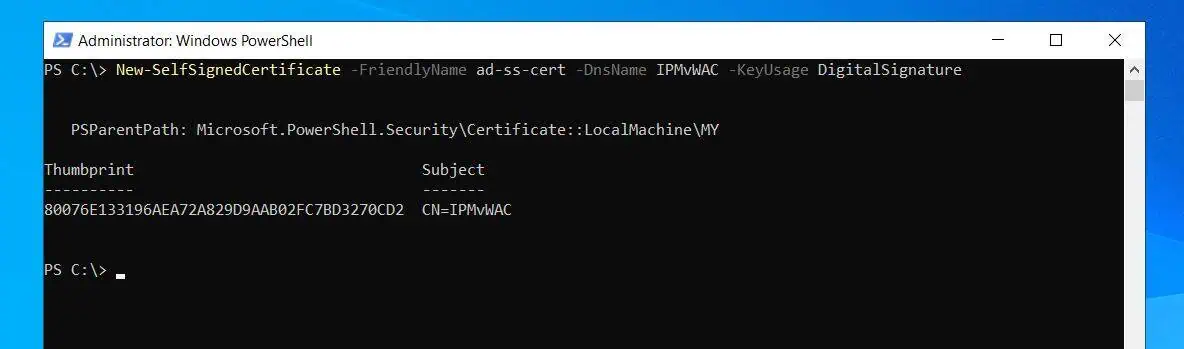
Open PowerShell as an administrator and run the command under to create a self-signed certificates.
Change the Dnsname, IPMvWAC, to your server title.
New-SelfSignedCertificate -FriendlyName ad-ss-cert -DnsName IPMvWAC -KeyUsage DigitalSignature
Task 3.2: Configure IIS HTTPS Binding to use the Certificate
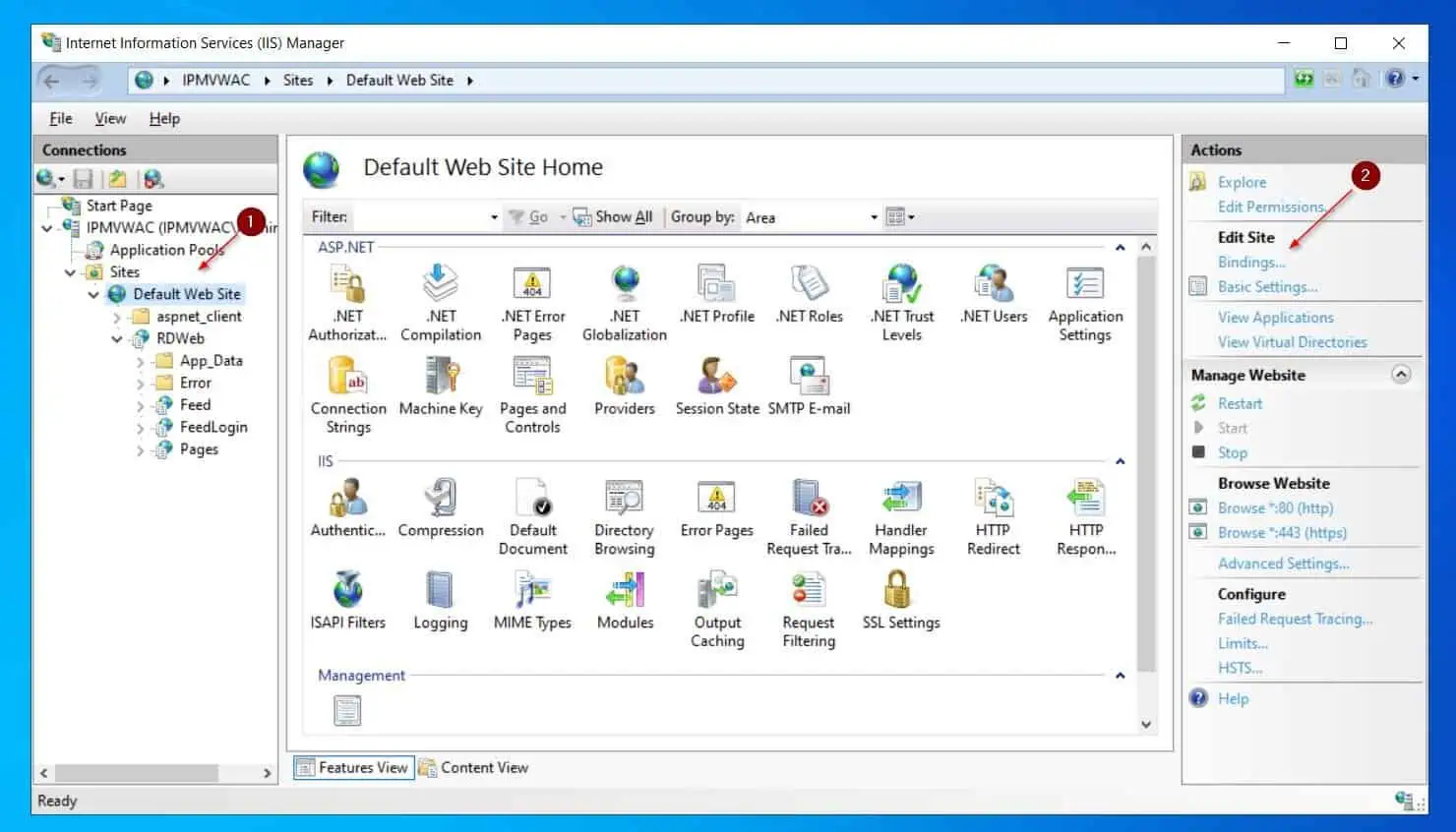
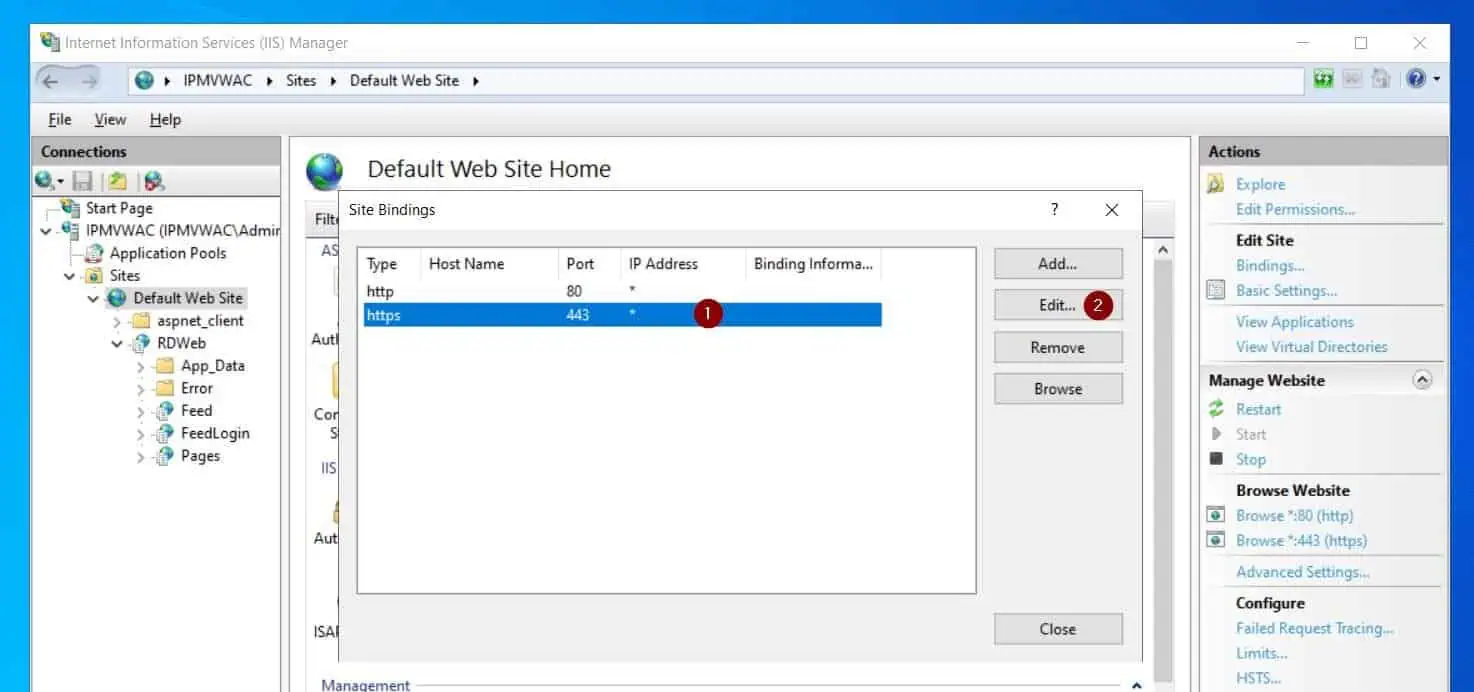
- Back within the IIS Manager, left-click Default Web Site, then within the Actions menu, choose Bindings.
- Then, on the Site Bindings pop-up, left-click https after which Edit.
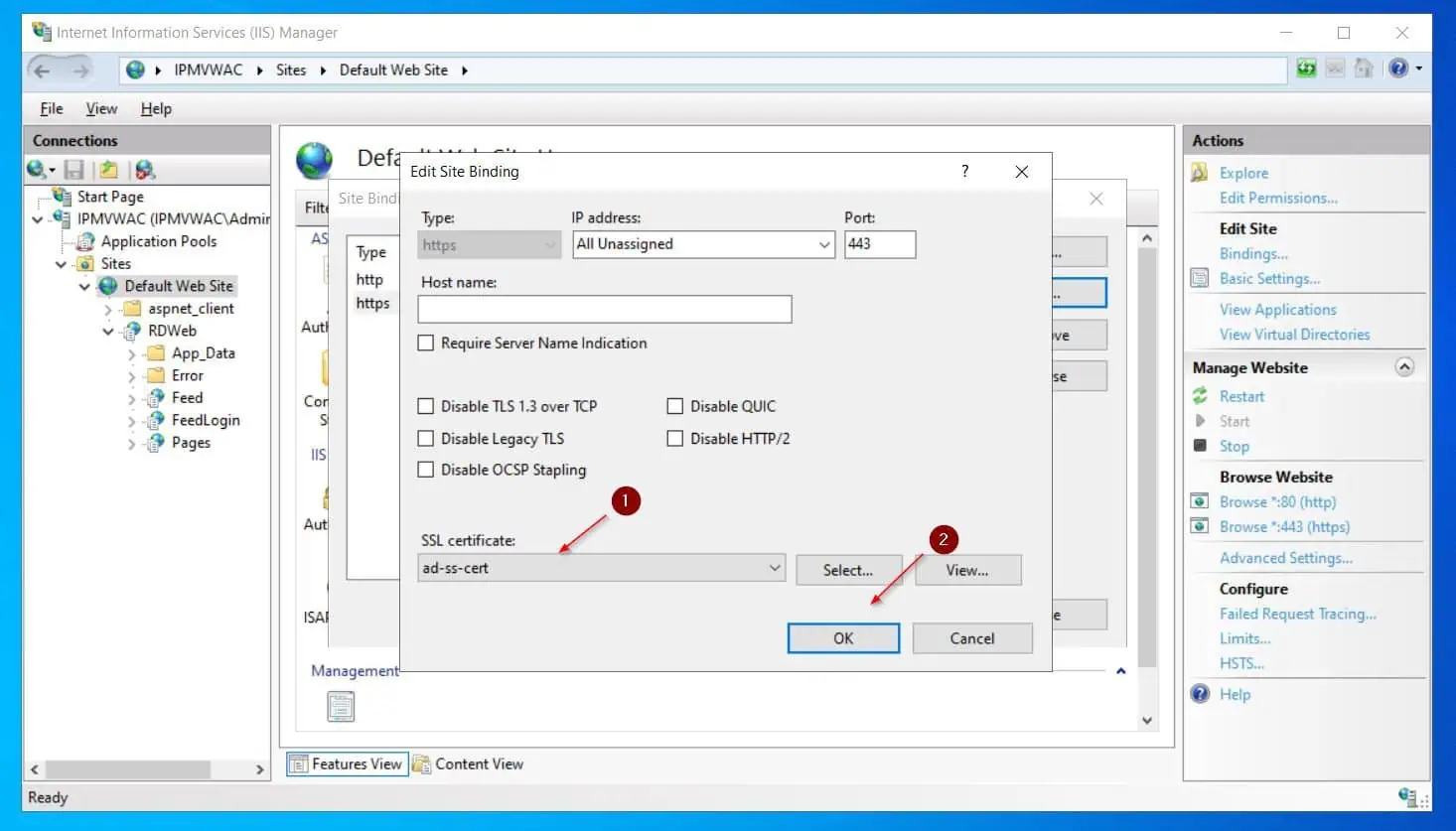
- Finally, on the Edit Site Bindings pop-up, choose the self-signed certificates from the SSL Certificate drop-down and click on OK. If you obtain a affirmation pop-up, choose sure.
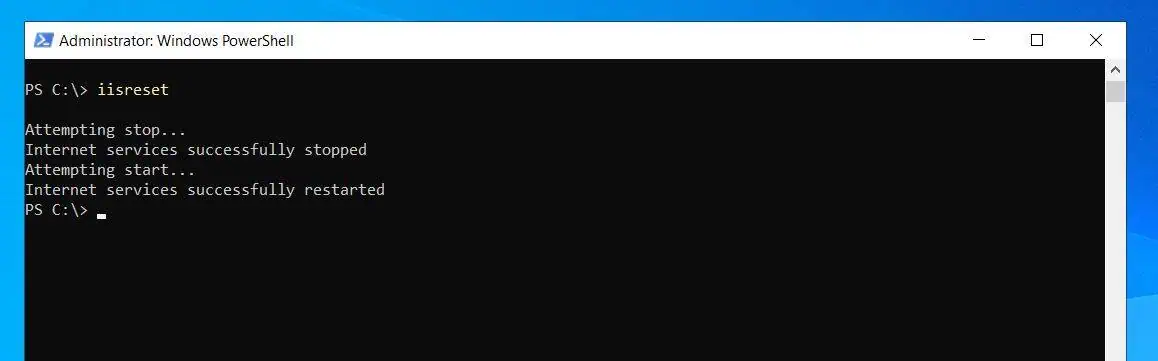
- Return to the PowerShell console and run the iisreset command.
Step 4: Test the Self-service Password Change Remote Desktop Web Site
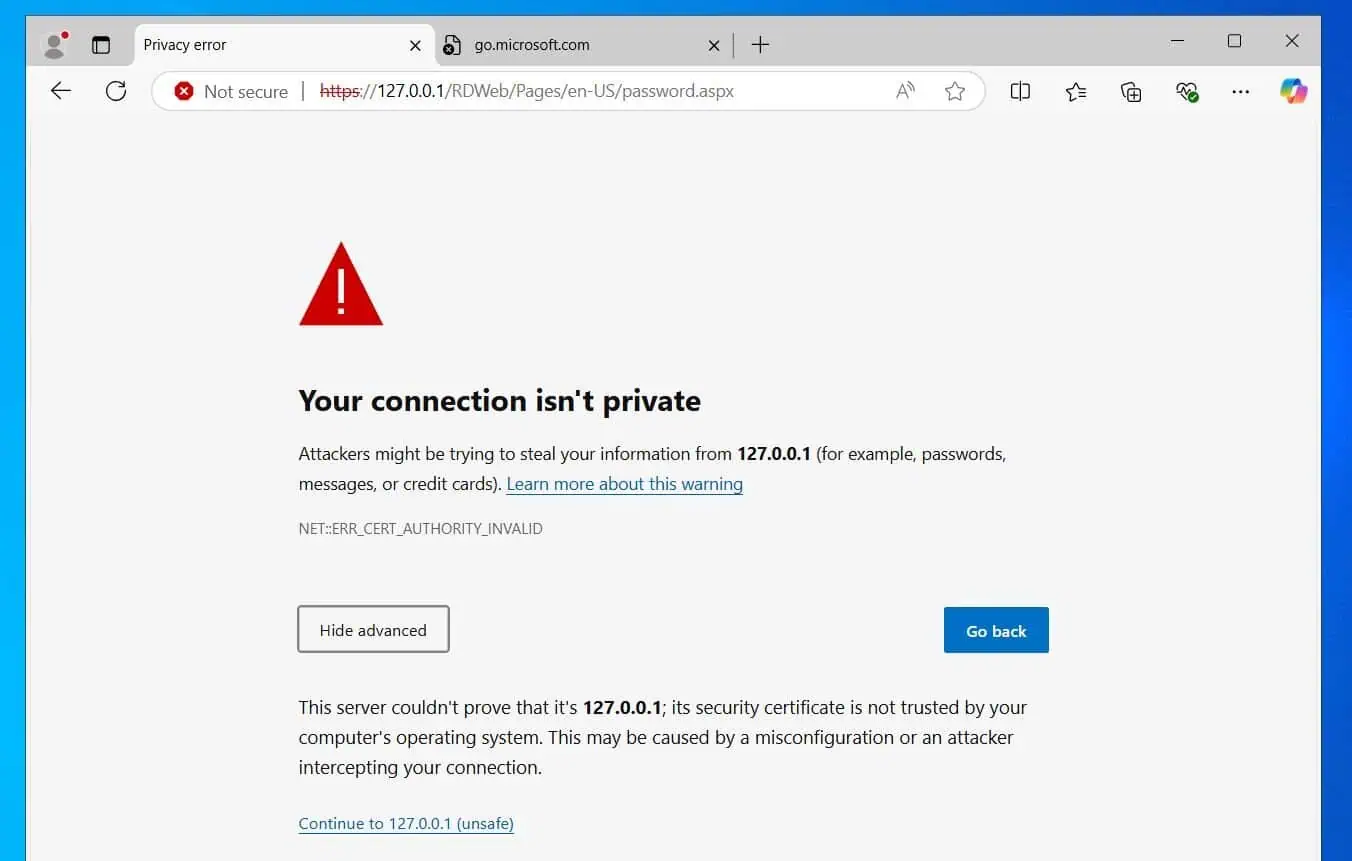
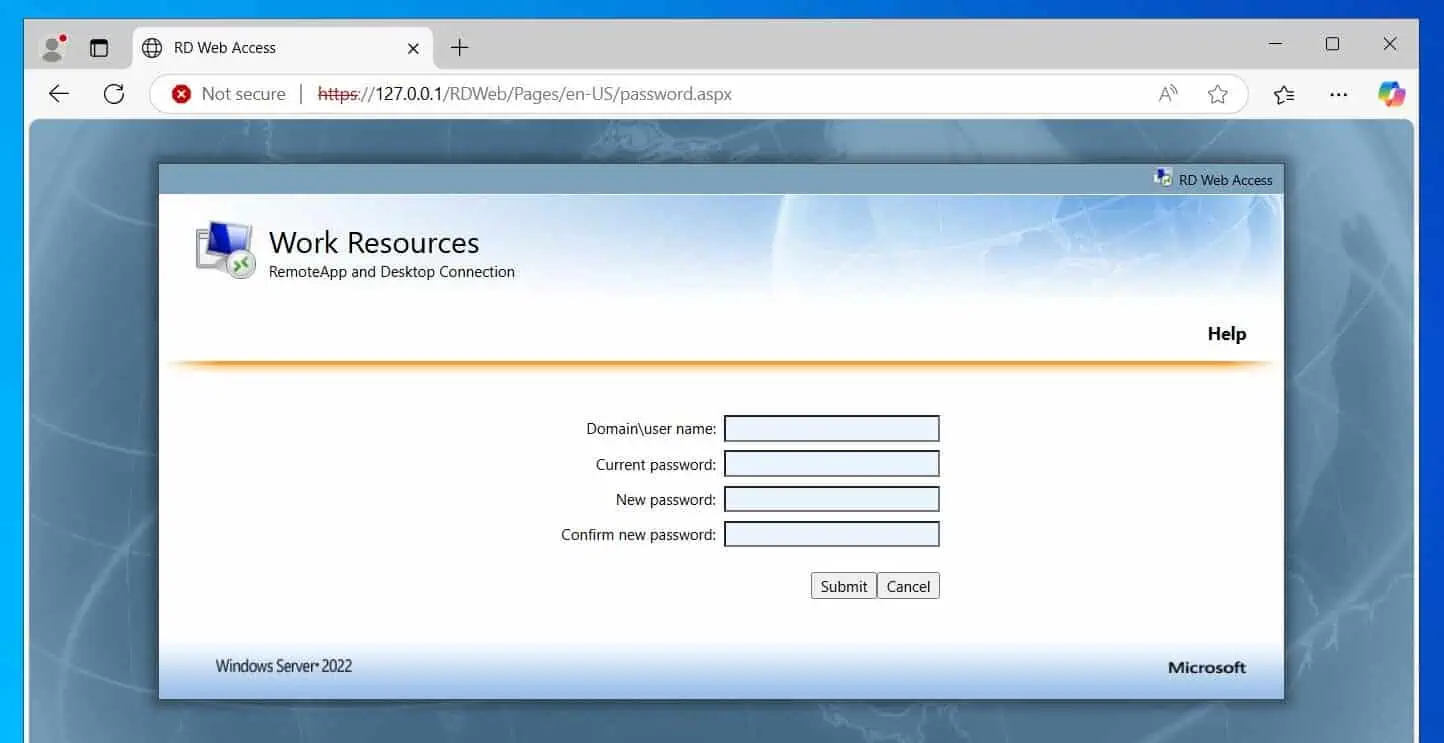
- From a browser on the native server the place you configured the self-service password reset, open the URL under:
https://127.0.0.1/RDWeb/Pages/en-US/password.aspx
- You’ll obtain a certificates warning. Click Advanced, then Continue.

The website shows the web page for altering an AD password.
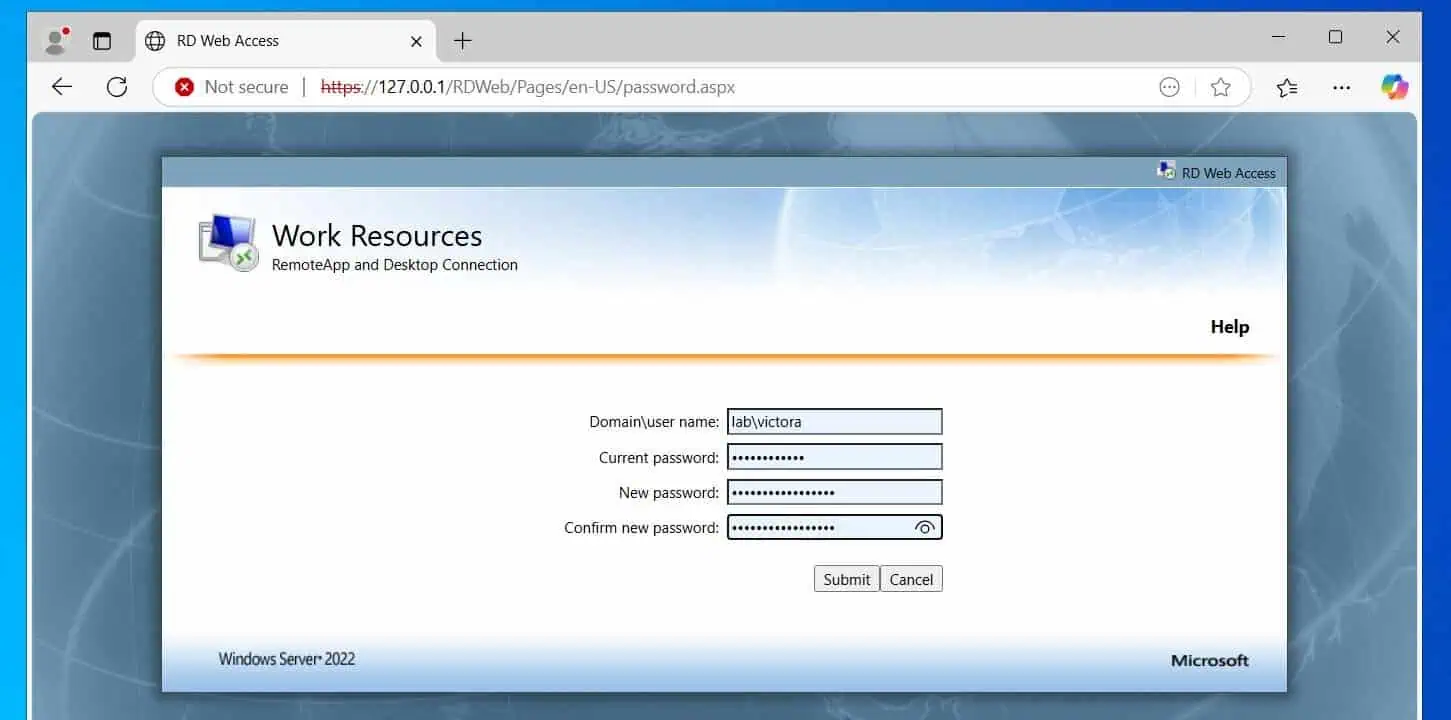
If your customers obtain the error message – “Your new password does not meet the length, complexity, or history requirements of your domain. Try choosing a different new password.” – modify your area password coverage.
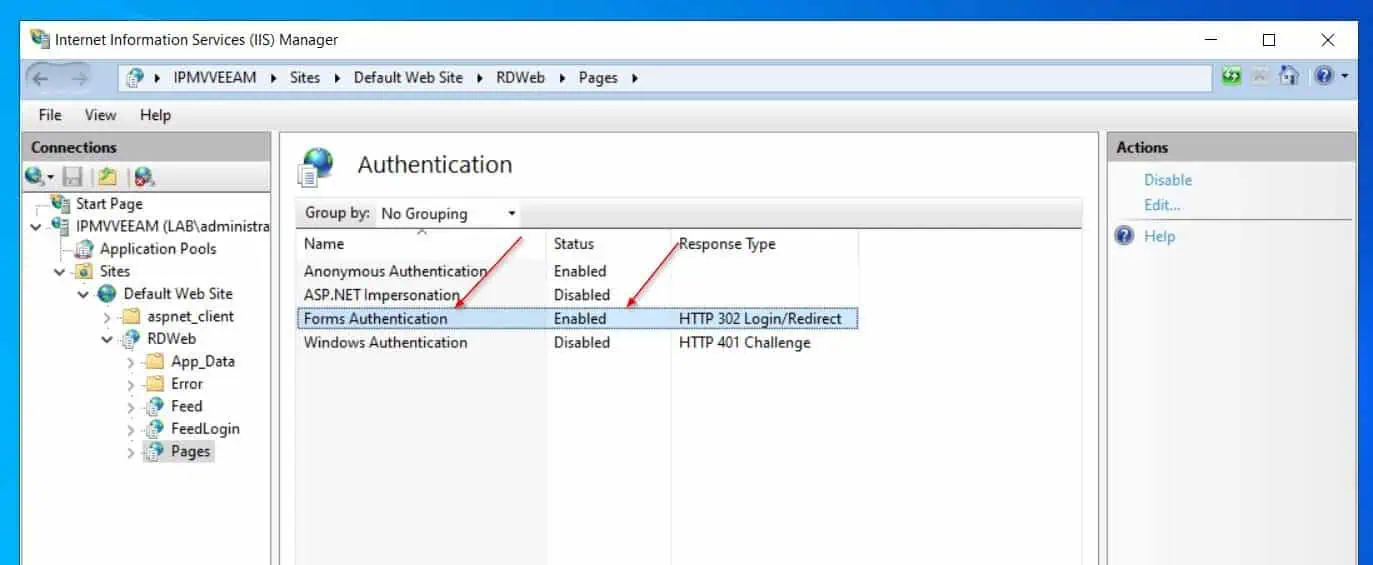
If the password reset doesn’t work, be certain that the Forms Authentication in Sites > Default Web Sites > RDWeb > Pages is enabled.
Conclusion
Providing your customers with a means to reset their passwords with out contacting the Service Desk is a time saver. In this hands-on information, I’ve defined the steps to allow self-service password reset utilizing Remote Desktop Web companies.
The first step is to set up the IIS internet server and the Remote Desktop Web Access Windows Server roles. After that, configure the PasswordChangeEnabled characteristic of the RDWeb website in IIS.
Finally, configure SSL and also you’re good to go.