
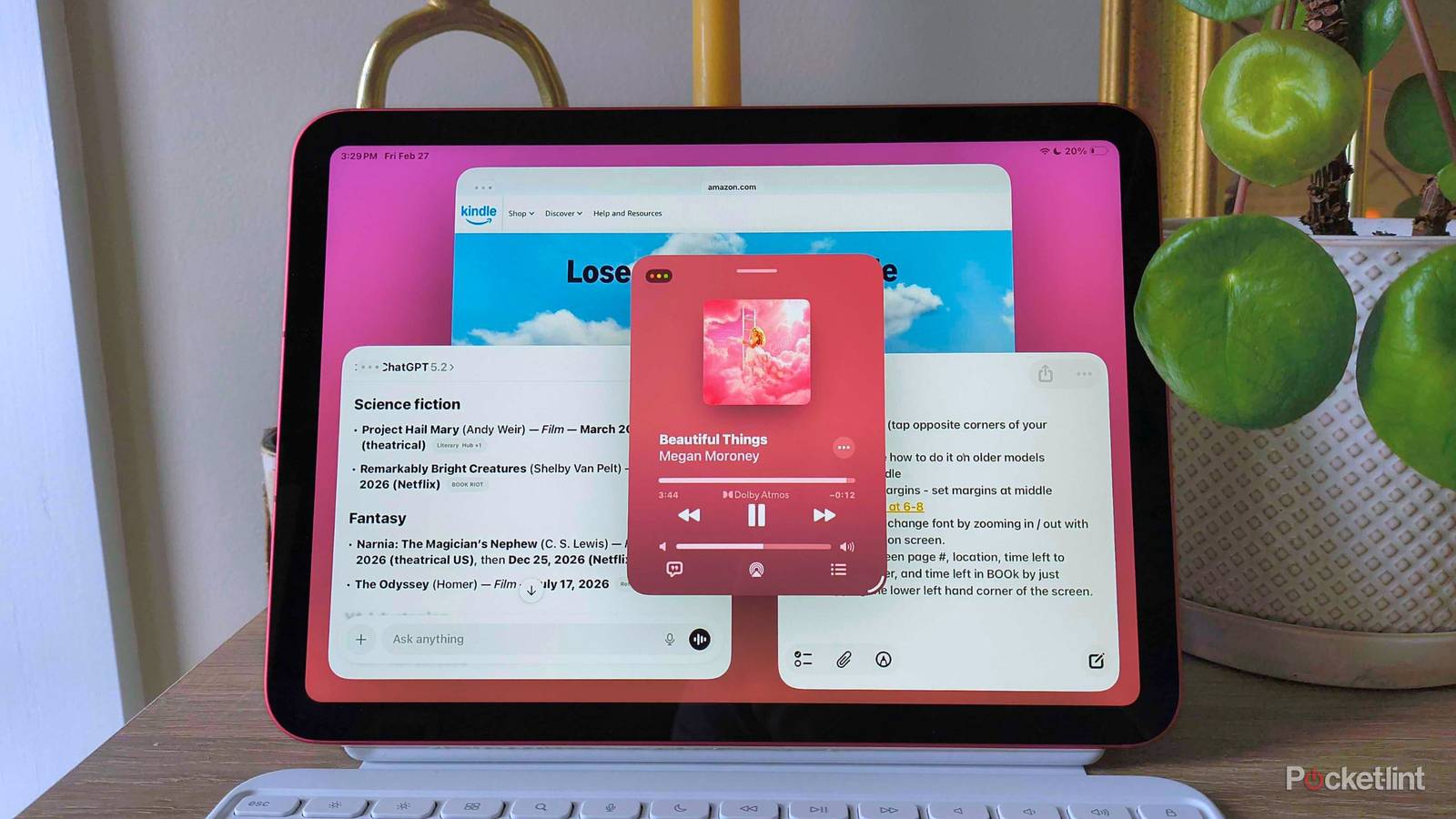
Your iPad can multitask like a Mac Leave a comment
As a MacE book Pro loyalist for over a decade, I may by no means have imagined finishing a full day’s work on a pill like an iPad. I used to be too cozy with macOS, and the rising pains that might include switching to iPadOS weren’t definitely worth the hassle. In reality, for years, I’d scoffed on the very thought of writing articles, modifying different work, and doing my freelance social media advertising all from a single pill — even when it was made by Apple.
iPads have been for drawing, streaming, and checking electronic mail on the go. That is, till iPadOS 26 added a characteristic that modified the way in which you can be productive on the pill. Before, Apple could not have bought me on an iPad over a MacE book. But with the brand new workflow I take advantage of now, I may simply depart my MacE book behind for a week. Here’s how I multitask on my iPad like a Mac.
- Brand
-
Apple
- Storage
-
128 GB
- CPU
-
A16
- Operating System
-
iPadOS
Apple’s most colourful iPad mannequin full with the A16 chip.
Set up Stage Manager
Yes, I caved

I stayed away from Stage Manager for years, largely as a result of colleagues and buddies warned me away from the characteristic. But the productiveness possibility received an improve with iPadOS 26: Windowed Apps.
Windowed Apps is its personal multitasking possibility that allows you to resize and rearrange a variety of home windows in your display, simply like you’ll on a Mac. Enabling it (Settings > Multitasking & Gestures > Windowed Apps) will make a small white line seem within the decrease right-hand nook of your home windows, which you can drag to resize. You can additionally faucet and maintain the highest of the window to maneuver it across the display, simply like a Mac.

It’s good by itself, however you shortly run out of area (particularly should you’re utilizing an 11-inch mannequin like mine). However, Windowed Apps snuck into Stage Manager and at last made it the multitasking device customers have been asking for.
To allow Stage Manager, open Settings > Multitasking & Gestures > choose Stage Manager.
The new Stage Manager has all the things that Windowed Apps does, nevertheless it takes it up a notch by together with completely different phases on the left-hand facet of your display. This instantly resonated with me, as a result of it felt like switching between the assorted desktops with a four-finger swipe on my Mac’s trackpad. You can use a four- or five-finger swipe to change between the phases in your iPad, too.

Each stage primarily serves as its personal group of home windows, so I create 4 completely different home windows to change between, often devoted to the next:
- Communication apps (Mail, Slack, Messages)
- Social media apps (Instagram, Facebook, and many others.)
- Music and leisure apps (Spotify)
- Content creation apps (Google Docs, Notes, my content material administration system, and many others.)
This manner, I can shortly swipe between phases if I must reference materials from one to drop into one other. Stage Manager gained yet one more loyal follower the second iPadOS 26 gave it the glow-up I wanted.
Easy arranging and Slide Over mode

Red gentle, inexperienced gentle, one-two-three! The stoplight menu that appeared on iPads with iPadOS 26 is something however kid’s play, nevertheless it made me simply as giddy. In every window’s higher left-hand nook, there’s now a acquainted pink, yellow, and inexperienced circle menu straight from macOS. The buttons operate the identical, too: pink closes the window, yellow minimizes it, and inexperienced expands it to full-screen. But there’s one other little trick hiding right here that makes rearranging your home windows even simpler than dragging them round.
If you faucet and maintain the stoplight menu, a dropdown will seem that allows you to transfer, resize, fill, or prepare your home windows in a preset order. It’s a cleaner (and sooner) solution to manage your display. I take advantage of it largely for splitting my display or tiling a number of apps evenly. The three-column format is my favourite — particularly for researching, note-taking, and content material creation multi function window.
There’s additionally an choice to put that window in a Slide Over mode, which helps you to conceal that app off-screen if you do not need it taking over area. I often reserve this for music and deal with it like a pop-out mini participant, simply like I do with Apple Music on my laptop computer.
If you wish to substitute an app in Slide Over mode, you can drag a new app out of your dock and hover it over the Slide Over window. It will fill the area and substitute it whenever you drop it in.
Other acquainted options from macOS
Just like house

On a Mac, there’s a menu bar on the high of your display that offers you much more management over no matter software you are utilizing. It’s the one with File, Edit, View, History, Help, and many others. This did not exist on the iPad earlier than, and it made me really feel a little helpless when it got here to the apps I had opened on my pill.
Lo and behold, iPadOS 26 introduced that characteristic to the desk, too. Now, you can swipe gently from the highest center of the iPad display to disclose that menu bar, which seems to be nearly an identical to a Mac’s. If it would not work, make certain to return into Settings > Multitasking & Gestures > and toggle “Swipe to Reveal Menu Bar” on.

The final characteristic I cherished on my Mac that made its solution to my iPad is Exposé. On a Mac, should you swipe up in your trackpad with 4 or 5 fingers, it reveals all of your home windows and desktops spaced neatly the place you can see all of them. It’s a lifesaver whenever you simply can’t discover that one window you misplaced on the display, which was once a big downside for me on my iPad, even with window/app tiling.
Now, Exposé enables you to see all of your open apps on iPad, too. However, to entry it, all it is advisable do is swipe up and maintain with one finger to see the app home windows unfold out properly throughout your display. If one in all your phases has a number of app home windows in it, the preview will present each home windows and embrace each app icons on the backside.